

VIET HAUS BIO
DER URSPRUNG

Eine lange Geschichte des Pfeffers
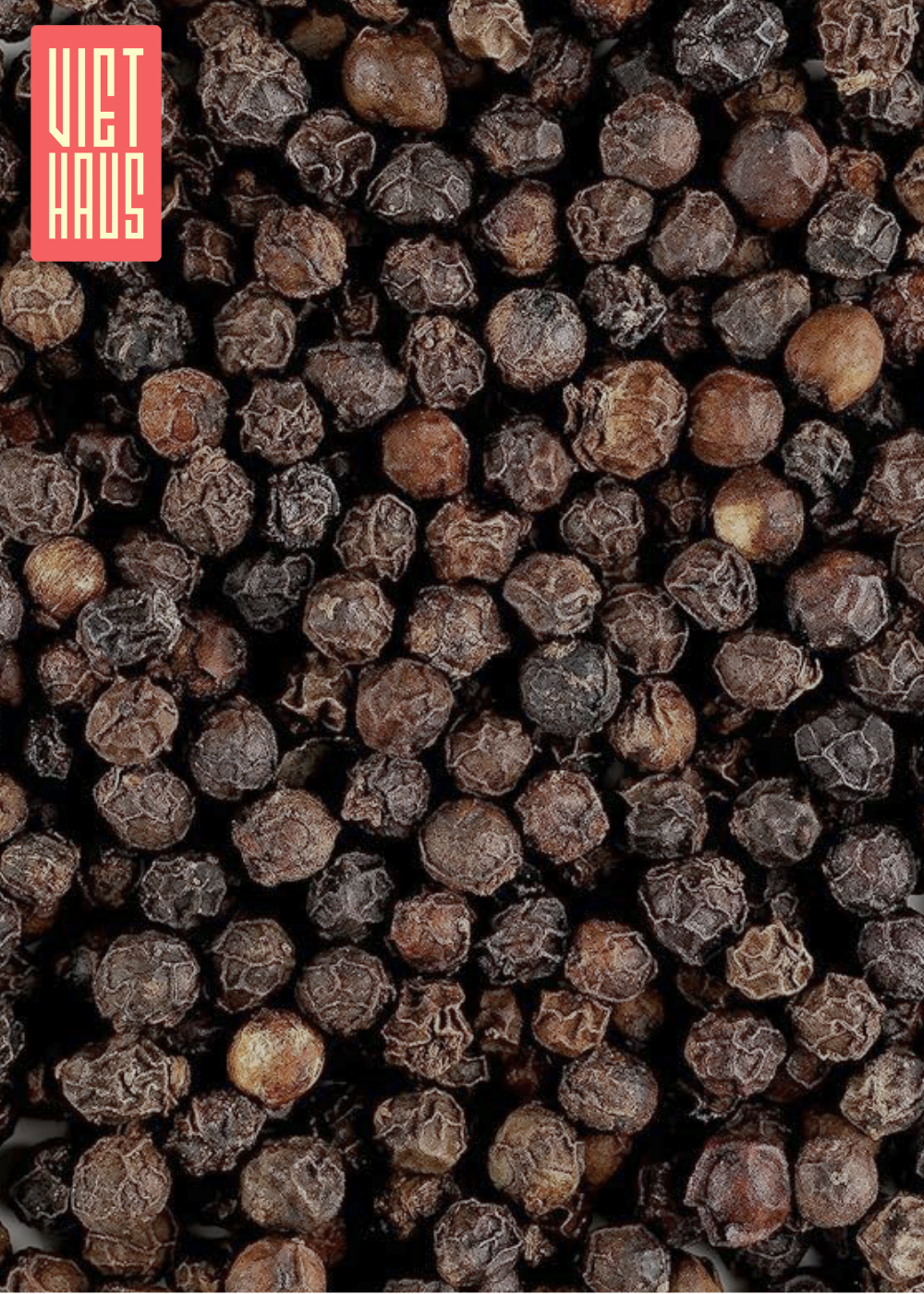
Schwarzer Pfeffer stammt aus Südost- oder Südasien.
Seit dem 16. Jahrhundert wird schwarzer Pfeffer als „schwarzes Gold“ gehandelt, geschätzt für seine intensive Wirksamkeit und seinen kommerziellen Wert.

Anfang des 20. Jahrhunderts importierten die Franzosen offiziell diese besondere Sorte. Die ersten Plantagen wurden in ganz Zentralvietnam angelegt.
Darunter stach eine Region mit ihrem unverwechselbaren, kräftigen Geschmack hervor. Sie wird Vinh Linh Pfeffer genannt.
Der Bezirk Vinh Linh gilt als das Herz des Quang Tri Pfeffers und macht fast 50 % der gesamten Pfefferanbaufläche der Provinz aus. Heute ist der Vinh Linh Pfeffer immer noch als die Quelle der vietnamesischen Pfeffersorten bekannt und bildet die Grundlage für die Entwicklung anderer berühmter Regionen wie dem Chu Se Pfeffer.

ANBAUBEDINGUNGEN

Unter rauen klimatischen Bedingungen
Der Bezirk Vinh Linh ist bekannt für sein raues Klima und ist daher ein wichtiger Akteur auf dem vietnamesischen Markt für Premium-Gewürze.
- Das Klima ist geprägt von zwei ausgeprägten Jahreszeiten: der Trockenzeit (Jan-August) und der Regenzeit (Sep-Dez).
- Der Tag-Nacht-Temperaturunterschied kann 10 °C erreichen.
- Dieses Gebiet wird stark von den heißen, trockenen Laotischen Winden und Seestürmen beeinflusst.
Diese rauen Bedingungen zwingen die Pflanzen, höhere Konzentrationen an ätherischen Ölen zu entwickeln. Ihr Geschmack ist spürbar kräftiger, schärfer und aromatischer.
-

Pfeffer in Südvietnam
Größe: Größer, aber lockerere Struktur.
Profil: Ein weiches Hitzeprofil mit einem intensiven Duft.
Erntezeit: März. -

Vinh Linh Pfeffer
Größe: Klein und dicht.
Profil: Hoher Öl- und Piperingehalt, führt zu scharfer Würze und kräftigem Aroma.
Erntezeit: Juni - Juli.


DER ANBAU

Traditionelle Praktiken
Wir arbeiten mit 500 Kleinbauern zusammen, die jeweils durchschnittlich 0,5 ha Land rund um ihr Haus bewirtschaften.
Diese Bauern haben nicht die Gewohnheit, Pestizide zu verwenden; sie pflegen weiterhin ihre natürlichen Anbaumethoden. Daher erfüllt die Qualität globale Bio-Standards.
Die Bauern betreiben Mischkulturen – sie wechseln Pfeffer mit Ingwer, Kurkuma und Zitronengras ab –, um Schädlinge und Krankheiten zu reduzieren, den Boden anzureichern und ein ausgewogenes Ökosystem zu erhalten. Dies ist auch eine Möglichkeit, das saisonale Einkommen der Menschen zu erhöhen.


WAS MACHT ES BESONDERS?

PRODUKTPALETTE
-

Ganzer Pfeffer
Ganze, getrocknete Pfefferkörner, die maximale Schärfe und natürliche Öle bewahren. Ideal für Gewürzmühlen, Einlegen und das Aromatisieren verschiedener kulinarischer Flüssigkeiten oder Großextraktionen.
-

Grob gemahlener Pfeffer
Große, rissige Fragmente, die intensive Hitze und sichtbare Textur liefern. Perfekt für Trockenmarinaden, zum Krusten von Fleisch und als scharfes Gewürz zum Verfeinern von herzhaften Gerichten.
-

Fein gemahlener Pfeffer
Gleichmäßig verarbeitete Partikel für ausgewogenen Geschmack und gleichmäßige Schärfe. Entwickelt für Tischgewürze, kommerzielle Gewürzmischungen und allgemeine Anwendungen in der Lebensmittelindustrie.
-

Pfefferpulver
Feiner, aromatischer gemahlener Pfeffer für schnelle Geschmacksentfaltung. Eine vielseitige Zutat zum Würzen von Saucen, in der Lebensmittelverarbeitung und der industriellen kulinarischen Produktion.
-

Handelsmarke
Umfassende Lohnfertigungs- und kundenspezifische Verpackungslösungen. Zugeschnitten auf marktreife Marken, Food-Service-Distributoren und spezialisierte internationale Exportanforderungen.


